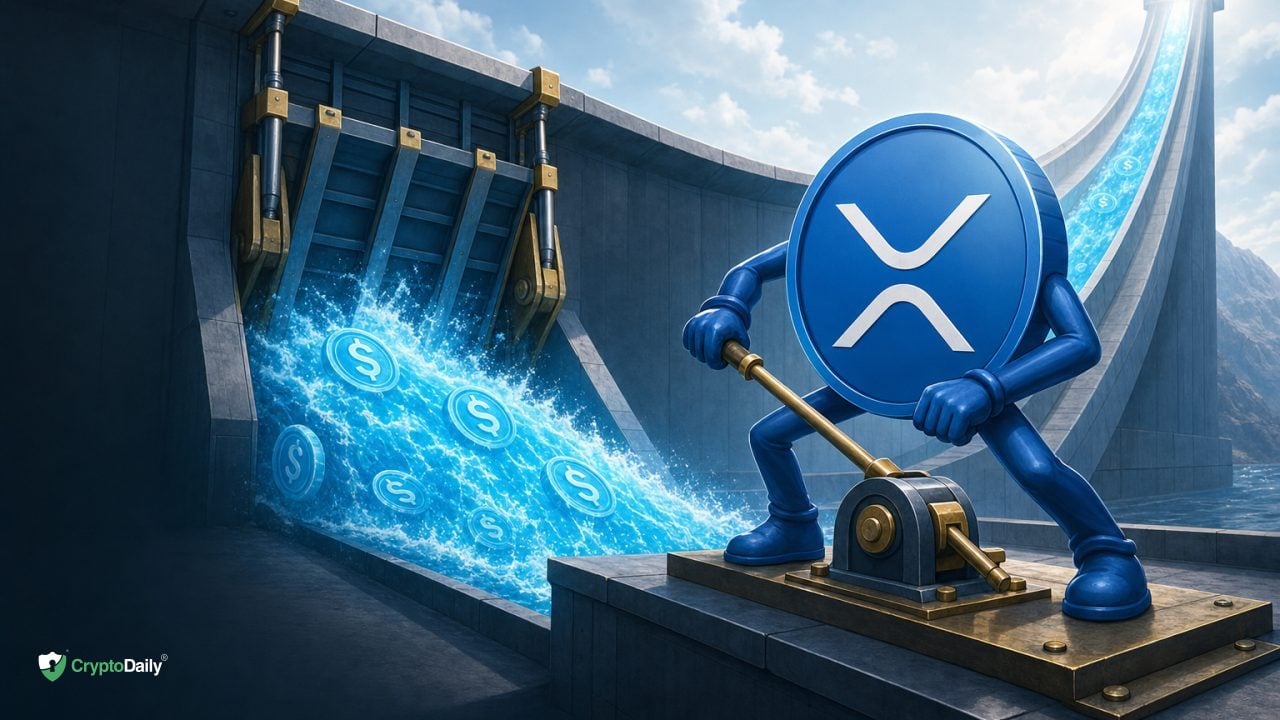
There’s a new stablecoin map being drawn, and Ripple’s name is on it. If Open USD really ships the way it’s pitched, we could be staring at a fresh liquidity lane that brushes right up against XRP flows. The question is simple enough: does this help XRP holders and builders, or just shuffle logos around?
Let’s break the moving parts down, look at where the frictions sit, and get practical about what to watch and how to prepare without getting caught in hype. None of this is advice. It’s a playbook to make cleaner decisions.
Aspect
What to Know
What is Open USD
A consortium-backed stablecoin by Open Standard, announced June 30, 2026, with 140+ partners including Visa, Mastercard, Coinbase, BlackRock, and Ripple Open Standard (official announcement).
Fee model
Minting and redeeming planned with no fees or artificial caps; reserve earnings mostly flow back to partners after a small management fee Open Standard.
Timeline and chains
Targeted to go live later in 2026; partners make clear a multi-chain rollout including names like Solana, Base, Polygon, and Stellar Open Standard.
Immediate market impact
Circle’s listed shares fell roughly 16–17% the day of the announcement, signaling investors see real competition to USDC CoinDesk.
XRPL angle
Ripple is named as a partner, and XRPL validators have already warned of a fake Open USD issuer popping up on XRPL, urging caution until official verification appears MEXC / crypto.news.
Who could benefit
Payment networks, banks, fintechs, exchanges, and ecosystems where Open USD deploys. XRP traders may benefit if XRPL liquidity deepens and ramps connect cleanly.
Key risks
Issuer and bridge impersonation, governance capture, regulatory constraints, and liquidity fragmentation across chains and venues.
Open Standard is pitching Open USD as a collaborative stablecoin. Think of it as shared plumbing where many big pipes meet. The headline pieces are the partner roster and the business model. More than 140 firms, from card networks to banks and exchanges, are in the launch circle, Ripple among them Open Standard. The model is simple on paper: let businesses mint and redeem with no fees, then return most reserve earnings to participants after a small program fee Open Standard.
That changes incentives. If the partners earn yield from reserves, they’re motivated to route flows through Open USD. It also hits the edges of the existing USDC moat. Markets noticed fast. Circle’s stock dropped hard on announcement day, roughly 16–17 percent, which is a loud signal that incumbents may have a fight on their hands CoinDesk.
Multi-chain matters here. Open USD is targeting a 2026 go-live with plans to show up on several networks, and the named partners include ecosystems like Solana, Base, Polygon, and Stellar Open Standard. If XRP Ledger becomes one of the landing zones, the mechanics come down to two things: how issuance is handled on XRPL and how liquidity routes between XRPL and the rest of the map. That’s where this could help or hurt XRP traders, depending on execution.
XRPL has its own design patterns. Trust lines and rippling control who can hold what and how value flows. There’s also an on-ledger AMM now, plus a mature DEX culture that knows how to price IOUs and native assets side by side. A clean, verified Open USD issuer on XRPL could slide right into that tooling. A messy, spoofed one already tried to. Validators flagged a suspected fake Open USD issuer within days of the announcement and told everyone to hold off until there’s two-way verification MEXC / crypto.news. That’s your reminder that stablecoin plumbing is part code, part social proof.
Glossary in plain English
- Open USD (OUSD) A planned consortium stablecoin with a partner revenue share model and no-fee mint/redeem for businesses.
- Consortium stablecoin A token whose rules and economics are shared by multiple big participants, not a single issuer calling every shot.
- Reserve yield Interest earned on the cash and treasuries backing the stablecoin. In this design, most of it goes back to partners.
- XRPL trust line A permission you set to hold an issued asset on the XRP Ledger. No trust line, no balance.
- Rippling XRPL setting that lets equivalent IOUs substitute along a path. Useful, but risky if you do not manage issuer lists carefully.
- AMM on XRPL The on-ledger automated market maker that prices pairs and shares fees with LPs. Adds native liquidity venues for issued assets.
Step-by-Step Playbook
- Track the official channels Bookmark the Open Standard announcement and partner updates, and only trust issuers that are confirmed by both Open Standard and the hosting chain’s canonical sources.
- Map your rails List where you onboard and offboard. If your exchange, bank partner, or PSP joins Open USD, your routing costs and settlement times might change fast.
- Prepare XRPL accounts If Open USD lands on XRPL, set explicit trust lines to the correct issuer only, disable rippling where appropriate, and segregate wallets for trading vs custody.
- Plan liquidity routes Identify your primary pairs. Will you trade OUSD-XRP on XRPL’s AMM, or route OUSD to centralized venues and back to XRP? Write it down before volatility hits.
- Set verification rituals For any new issuer, run a checklist: issuer address match, official domain signature, explorer cross-check, and community validator confirmations.
- Instrument your risk Assume chain outages and bridge hiccups. Keep a buffer in an alternate stablecoin and hold some native gas on every chain you touch.
- Measure the spread Track OUSD-XRP spreads and depth versus USDC-XRP and USDT-XRP. If spreads compress and depth rises, you have a real catalyst, not a headline.
- Revisit treasury rules If you manage a desk or DAO treasury, predefine how much exposure to allow in a new consortium stablecoin until audits and redemptions prove themselves over time.
Where Open USD Could Touch XRP Liquidity
For XRP, catalysts arrive in quiet ways. Liquidity density around trading hubs. Tighter spreads on core pairs. Faster fiat ramps in and out. If Open USD gets real distribution on exchanges and payment gateways, and if an XRPL issuer is officially sanctioned, three practical things could happen.
First, the XRP leg in cross-venue routes might get cheaper. If partners like big PSPs start quoting OUSD widely, market makers can triangulate between OUSD, XRP, and fiat faster. Low-friction mint and redeem is key here. If there are no fees and no artificial caps for businesses, as Open Standard says, then scale plays to the partners’ advantage Open Standard. That can flatten spreads.
Second, XRPL’s on-ledger venues could see fresh order flow. Issued dollars that people trust tend to become the base pair. If the issuer is cleanly verified and wallets set proper trust lines, OUSD-XRP on XRPL’s AMM or order books could gain share. That is not automatic. It requires market makers to show up and users to prefer it over USDC IOUs or exchange dollars.
Third, there’s a competitive push. The market already treated Open USD as a threat to USDC. The CRCL drawdown on day one was blunt evidence of that perception CoinDesk. If USDC defends with incentives or deeper listings, XRP liquidity could benefit anyway. Competition that lowers costs helps the routes XRP already lives on.
Choosing Your Stablecoin Route on XRPL
Assuming Open USD shows up on XRPL with a verified issuer, here’s how the practical choices could stack up next to today’s common paths.
Route
Why you’d pick it
What to watch
USDT/USDC on centralized exchanges
Deepest liquidity today for XRP in many regions. Known ramps and rebates.
Withdrawal fees, venue risk, and reliance on off-ledger settlement.
Open USD on XRPL (native issuer)
Direct on-ledger trading vs XRP, potentially low slippage if market makers commit.
Issuer verification, reserve transparency, policy changes by the consortium.
Open USD on other chains then bridge
May access incentives or deeper liquidity elsewhere while keeping XRPL as a final step.
Bridge risk, extra hops, potential stuck funds during incidents.
Fiat on-ramp to OUSD then XRPL
Cleaner accounting for some businesses if partners offer direct mint and quick redemption.
KYC friction, partner availability in your jurisdiction, cutoff times.
Pro tip: On XRPL, lock down rippling and filter trusted issuers. The fastest way to lose money with a new dollar token is letting spoofed IOUs slip into your path settings.
Consortium Money Comes With Trade-offs
It is tempting to see a long partner list and think safety. Reality is messier. A consortium can align heavyweights, but it also concentrates decision power. If yield sharing is the magnet, the group will naturally tune policies to protect that yield. That could mean tighter KYC, stricter blacklists, and slower reaction cycles when something breaks. Good for compliance. Not always great for open access.
From a user’s perspective, the big questions are dull but decisive. Who exactly holds the reserves. How redemption windows work in stress. What the legal claims are for token holders versus partners. Open Standard says minting and redeeming will be free for businesses and that most reserve earnings get returned to partners Open Standard. That is a powerful carrot. It also creates winners and non-winners. If you are not a partner, your leverage is reputation and exit options. Keep both ready.
There’s another trade-off: fragmentation. Multi-chain is a feature until it splits liquidity into puddles. If OUSD shows up on five chains and one XRPL issuer appears later, price discovery might be thin on any single venue until market makers consolidate. That phase can be noisy. Expect weird spreads and opportunistic arbitrage until routing norms form.
Scenarios to Watch Through 2026
Let’s keep it grounded and outline a few paths this could take. None of them need hopium to be plausible.
Bullish scenario: Open USD secures fast listings across exchanges and wallets. A verified XRPL issuer launches with seeded liquidity. Partners steer payments flows through OUSD to capture reserve yield. XRP pairs see tighter spreads, and XRPL AMM volumes pick up as OUSD becomes a base unit. USDC responds with incentives, and the competition keeps fees low. Net positive for XRP traders and builders.
Base case: Open USD rolls out on the biggest smart contract chains first. XRPL support lags or appears with limited liquidity. Adoption is mixed, with a few regions and PSPs leaning in. XRP liquidity improves around certain corridors but most trading still rides USDT and USDC. Gradual gains, not a switch flip.
Bearish case: Legal or operational snags slow the launch. A wave of impersonators muddies trust, similar to the early XRPL warning that flagged a fake issuer right after the announcement MEXC / crypto.news. Market makers stay cautious and spreads remain wide. XRP sees little direct benefit and people revert to known stablecoins while waiting it out.
Pitfalls & Red Flags
- Issuer impersonation Verify two-way. Open Standard’s site and chain-specific explorers must point to the same issuer address. XRPL already saw a suspected fake.
- Governance capture A small steering group can tilt policies in ways that limit open access or penalize non-partner users. Watch change logs, not press releases.
- Liquidity puddles Early multi-chain deployments often split depth. Don’t assume the deepest pool is on your favorite chain on day one.
- Redemption friction Free mint and redeem is promised for businesses. The fine print on eligibility and timing matters if you depend on cash out cycles.
- Counterparty concentration If a single custodian or bank underpins large chunks of reserves, idiosyncratic risk sneaks in. Seek disclosures and audits.
- Regulatory whiplash New frameworks can add obligations quickly. If your use case sits near payments or securities lines, plan for more KYC.
If you want more grounded coverage as this rolls out, Crypto Daily tracks the stablecoin race and XRPL developments in real time. You can follow our latest analysis at cryptodaily.co.uk.
Frequently Asked Questions
Is Ripple issuing Open USD on XRP Ledger?
No. Open USD is an Open Standard initiative with many partners, Ripple included, but that does not mean Ripple is the issuer on XRPL. If an XRPL issuer appears, wait for explicit, two-way verification from Open Standard and XRPL sources before trusting it.
When is Open USD supposed to launch?
Open Standard says the network will go live later in 2026 and intends a multi-chain footprint from the start, referencing ecosystems like Solana, Base, Polygon, and Stellar in its partner list.
How does the no-fee mint and redeem work?
The plan is for businesses to mint and redeem without fees or artificial limits, with most reserve earnings returned to partners after a small management fee. Eligibility and operational details will matter in practice, so look for formal docs as launch nears.
What’s the practical XRP benefit if Open USD lands on XRPL?
Potentially tighter XRP pairs, more consistent dollar liquidity on-ledger, and cleaner fiat routes via partners that adopt OUSD. The upside depends on verified issuance, market maker depth, and exchange support.
How do I avoid fake Open USD on XRPL?
Do not set trust lines until the issuer address is confirmed on Open Standard’s site and cross-referenced by known XRPL explorers and validator announcements. The early warning from XRPL operators shows spoofing is a real risk right now.
Will this hurt USDC and help XRP automatically?
Not automatically. Competition can compress spreads and push incentives that help everyone. Circle’s market reaction showed investors expect a fight, but XRP gains hinge on actual liquidity and routing improvements on venues you use.
Could holding Open USD be restricted?
It could. Consortium designs often bake in compliance controls. Expect KYC and potential blacklisting rules, especially for business minting and redemption. Read the access policies before you restructure your flows around it.
Disclaimer: This article is provided for informational purposes only. It is not offered or intended to be used as legal, tax, investment, financial, or other advice.