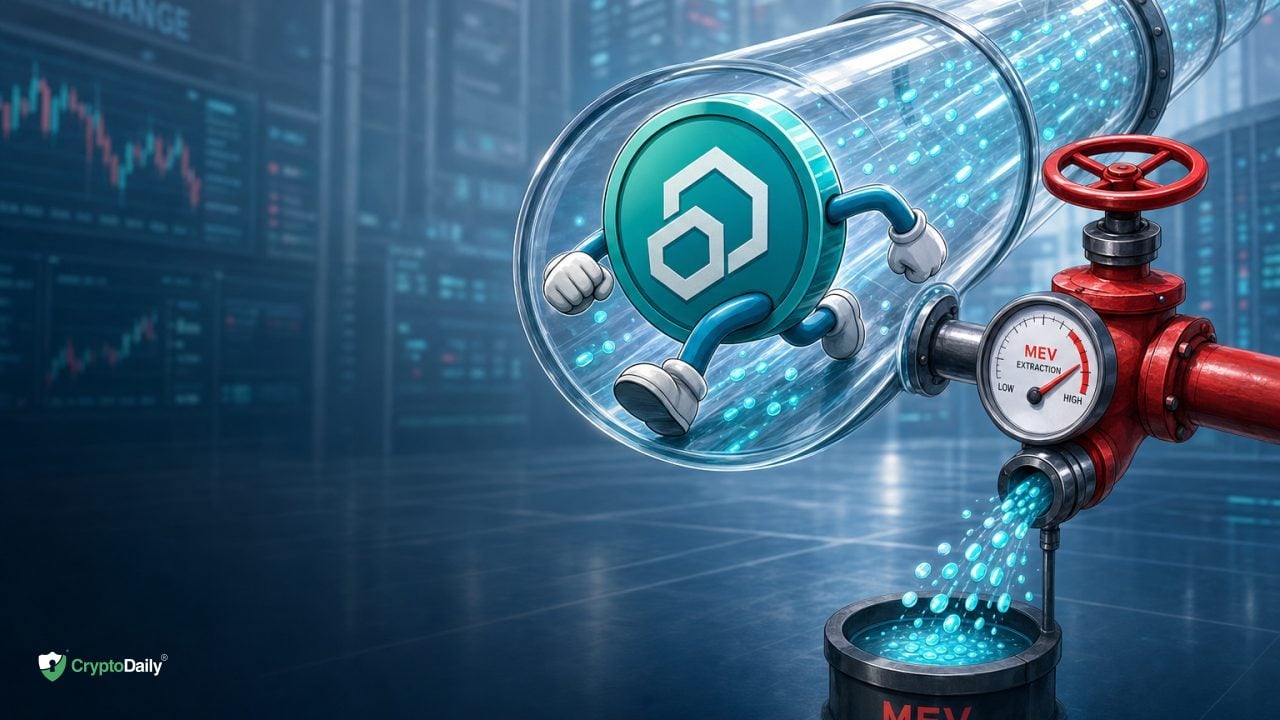
If you have ever paid more than expected on a swap or watched a liquidation happen a heartbeat before your repay, you have felt MEV take a bite. It is not a single attack. It is the structural side effect of how blockchains decide who gets into a block and in what order.
We will walk through what MEV actually is in plain terms, where the ordering power sits today, the ways it shows up on your PnL, and what you can do right now to leak less value. No scare tactics. Just the mechanics, some real-world patterns, and practical fixes.
None of this is financial advice. It is about market plumbing. And a lot of it is fixable with better tools and a couple of habits.
Point
Details
MEV is ordering power
Whoever influences which transactions land first can extract value from price impact, liquidations, and mispriced trades.
Sandwiching is the everyday tax
Your market order moves price, then a bot buys before you and sells after you, capturing the slippage you created.
Builders and validators split the pie
On Ethereum, searchers, builders, and validators coordinate via MEV-Boost and private routes that reorder and bundle flow.
Users can cut leakage
Batch auctions, private RPCs, intents-based routers, tighter slippage, and limit orders reduce your exposure.
Chain design matters
L2s have sequencers with different policies. Solana uses local fee markets and Jito. Each setup changes where MEV appears.
What MEV is and why it exists
MEV stands for Maximal Extractable Value. It is the extra profit available to someone who can choose which transactions go first, last, or together. On a public mempool, your transaction is basically a public intent with a price tag. If miners or validators, or anyone who can influence them, can see it before it lands, they can try to trade around it.
Think of a busy checkout line where the cashier can pick who goes next. If one person holds a stack of coupons that change all the shelf prices, the cashier can decide to ring them before or after you to make a profit from the price change. That timing is the value.
The Ethereum community has a whole primer on this, including the shift to Proposer Builder Separation and the ecosystem that formed around it. If you want the canonical overview, start here at Ethereum.org.
How it shows up in DeFi costs
Swaps and sandwiching
Most people meet MEV via a sandwich. You submit a market order on a DEX. A bot sees it, buys the token just before you to push the price up, lets your trade execute at a worse rate, then sells right after into the inflated price. You pay the slippage, they lock in the spread.
This is not always huge, but it is frequent. And if you trade volatile or thin pairs, the impact is obvious. Uniswap has written at length about mempool visibility and how off-chain intent systems try to block this pattern. Their intents-based router UniswapX introduced Dutch auctions and private filling to reduce sandwich risk. You can skim the mechanics in the docs from Uniswap.
Lending liquidations
When collateral drops and a position becomes liquidatable, whoever submits the liquidation first earns a bonus. That bonus is paid by the borrower. Searchers compete with high gas tips and private bundles to win that race. If you were close to the edge and hoped to repay, you might find you are too late because a liquidation bundle went private to a builder rather than through the public mempool.
NFT mints and claims
Anything time sensitive where being early pays can attract MEV strategies. Popular mints, airdrop claims, or bribe markets can be ordered so that a small group always gets the best slots while others overpay in fees or slippage.
Arbitrage that you fund
Arb is good because it keeps prices aligned across pools. The catch is that your market order often creates the mispricing that the arb bot immediately fixes. The profit from that fix does not flow back to you. It goes to the bot and often to the block builder and validator as well.
Who actually orders your trade
On Ethereum after the Merge, most blocks are built by specialized builders rather than by the validator that proposes the block. The dominant coordination layer is MEV-Boost, an open-source sidecar that lets validators source blocks from builders without trusting them. Flashbots maintains a reference implementation and documentation for this at Flashbots.
Before a block is proposed, a lot can happen:
- Your transaction might sit in the public mempool, visible to anyone running a node or connected to a relay.
- Or your wallet, RPC, or aggregator could route it privately to a builder or a solver network. That hides it from the public mempool and often from sandwich bots.
- Searchers scan for profitable patterns like liquidations or sandwiches, build bundles, and bid with gas tips or direct payments to builders to get their bundles included at a specific place in the block.
Coordinating all of this is a mini-market. It is not free. The payments that clear inclusion and ordering ultimately come from someone, often the end user.
You will also hear about order flow auctions, where wallets and aggregators sell the right to fill user trades to a set of solvers, ideally in a way that reduces MEV against the user and shares some of the surplus. CoW Protocol is the best known example here with frequent batch auctions that aim to neutralize sandwiching by crossing trades internally. Their docs give a crisp overview at CoW Protocol.
What it costs, plain numbers
Every protocol and pair is different, so do not anchor on these as averages. Treat them as sketches.
Example 1: a typical sandwich
You submit a 10,000 USDC market buy with 1 percent slippage on a mid-cap token. Mid price is 5.00. Your order would normally push the execution price to 5.02. A bot sees it. It buys just before you, nudging the pool so your fill becomes 5.04. You pay roughly 0.4 percent extra on the trade, about 40 dollars, plus a slightly higher gas tip because the block was hot. The bot flips right after and pockets most of that 40 dollars minus fees. You end up with fewer tokens than your quote.
Example 2: liquidation race
Your collateralized loan falls under the threshold. The liquidation bonus is 7.5 percent. A searcher wins the race and claims that bonus by selling your collateral. If your position was 20,000 dollars, that is 1,500 dollars extracted in one move. That payment keeps the lending market solvent, but the timing and routing make it largely a private race that you cannot see or front-run to save yourself.
Example 3: LP adverse selection
Liquidity providers do not get a pass. On concentrated AMMs, flow that shows up is often toxic. Prices move against idle LPs while arb bots keep the pool in line with external markets. The LP collects fees but also realizes losses from trading with informed flow, sometimes called loss versus rebalancing. Researchers and devs have covered this in detail. For a friendly starting point, see Uniswap research posts and talks on LVR, and the broader MEV reading list at Ethereum.org.
Ways to reduce leakage today
Use batch auctions or intents-based routers when possible
- CoW Swap: Routes trades to frequent batch auctions. Trades are matched off-chain first, which makes classic sandwiching much harder. Docs: CoW Protocol.
- UniswapX: Off-chain Dutch auctions and private filling reduce visible slippage. Blog and docs: Uniswap.
- 1inch Fusion: A resolver network that can fill orders privately with RFQ-like behavior. Learn more at 1inch.
Send orders privately when you can
- Private RPCs such as Flashbots Protect reduce mempool exposure and try to avoid sandwiching. Details are on Flashbots.
- MEV Blocker is another community RPC that aims to block sandwiches and share rebates. See MEV Blocker.
Pro tip: Private routing does not guarantee best price or inclusion. If a private route cannot fill, it may fall back to the public mempool. Check that behavior in your wallet and be ready to cancel or resubmit.
Tighten your own trading settings
- Lower slippage tolerance for market orders unless you truly need the fill. This reduces how much room a sandwich can harvest.
- Prefer limit orders or RFQ routes for large trades where timing is not critical.
- Split big orders into smaller chunks or use time-weighted execution if liquidity is thin.
- Avoid trading illiquid pairs during volatile windows like market opens or major releases.
Reduce liquidation odds
- Keep healthier collateral ratios than the protocol minimum, especially on volatile assets.
- Set alerts for price and health factor moves. If your platform allows automation, consider auto-repay or auto-collateral top-ups with clear limits.
- Remember that gas spikes happen during stress. Funding your wallet or bridging in the middle of a cascade is often too slow.
LPs: choose your battles
- Stick to pools where you have an edge, like stable pairs or ranges you can actively manage.
- Use analytics that estimate LVR or adverse selection. If fees do not cover expected losses from toxic flow, reconsider.
- Watch for designs that share some of the arbitrage surplus with LPs, either through built-in or external auctions.
Chain design differences you should know
Ethereum mainnet
Post-Merge Ethereum uses Proposer Builder Separation in practice through MEV-Boost. Builders compete to assemble the most valuable block, often by including private bundles from searchers. This improves validator revenue and can reduce some worst-case behaviors, but it also means transaction ordering is a market. The community is discussing enshrined PBS and other design changes to reduce centralization and make the market safer. You can follow the technical track via Flashbots research and the core dev notes on Ethereum.org.
Layer 2 rollups
Most L2s have a central sequencer that sets the order for the next batch. Some expose private mempools or protected order flow options. Others run auctions among solvers. The details matter a lot for MEV risk, since a single sequencer can prevent public sandwiching but can also internalize arbitrage. Always check your L2’s docs for how the sequencer handles ordering and what protection your wallet or router has by default.
Solana and local fee markets
Solana processes transactions in a different pipeline with local fee markets and high throughput. MEV exists there too, mostly via priority fees and bundle-like flows. Jito built an ecosystem of relays and auctions tailored to Solana. If you want a primer, start with Jito Labs. The patterns differ from Ethereum but the core idea is the same. Whoever can decide the order can capture value.
Who pays, who profits, and what can change
Users pay through worse prices and higher gas tips. Borrowers pay via liquidation bonuses. LPs pay by trading against better informed flow. On the other side, searchers capture opportunities, builders and relays take a cut for packaging and delivery, and validators or sequencers see higher returns for selling space and order.
This is not pure rent extraction. Some of it makes markets work. Liquidations protect lenders. Arbitrage keeps prices aligned. The open question is how to share the surplus fairly and how to block the parts that are just predatory, like classic sandwiches on retail-sized trades.
Design directions that could shift the balance:
- Frequent batch auctions and crossing engines at the entry point, which neutralize sandwiching and reduce unnecessary slippage.
- Order flow auctions that pay rebates back to users or LPs rather than to intermediaries.
- Protocol-level changes that cap or redirect MEV, including research around enshrined PBS or MEV burn. Keep an eye on core research threads at ethresear.ch.
Common mistakes to avoid
- Using high slippage on volatile pairs out of habit. You almost never need 5 percent.
- Submitting huge market orders during news events. You are volunteering to be the other side of an arb bundle.
- Assuming private RPC equals best price. It helps, but quotes and liquidity still rule.
- Ignoring approval scopes. Unlimited approvals to shady routers add smart contract risk on top of MEV leakage.
- Letting loans hover near the liquidation line. You are racing bots during the worst gas spikes of the month.
What to watch next
- Wallet defaults: Does your wallet route privately by default, and does it share any rebates with you via an order flow auction.
- Batch-first DEXs: More routers are moving to intents and auctions. Expect deeper competition among solver networks.
- Sequencer policies on L2s: Transparency around ordering rules and any private deal flow with solvers or market makers.
- Research on enshrined PBS and MEV burn: These could change the economics of who gets paid for ordering and how much.
- LP protections: Better pricing hooks, dynamic fees, or designs that push some arbitrage surplus back to LPs.
If you want a steady pulse on MEV, DeFi plumbing, and the tools that actually help, we cover it regularly at Crypto Daily without the fluff.
Frequently Asked Questions
Is MEV illegal or just part of crypto markets?
MEV is a byproduct of open mempools and auctioned blockspace. Some tactics are clearly predatory, but the mechanism itself is not illegal. Networks are trying to reduce the harmful parts while keeping the parts that make markets efficient, like liquidations and arbitrage.
Can private RPCs fully prevent sandwiches?
They help a lot by hiding your order from the public mempool. But they do not guarantee inclusion or best price. If a private path cannot fill, you might fall back to public routes. Always confirm how your wallet handles failures and whether it retries publicly.
What is the difference between front-running and a sandwich?
Front-running is getting in before your trade to benefit from your price impact. A sandwich adds the back-run leg, where the attacker also sells right after your fill to lock in profits. The combination extracts more from your slippage window.
Do L2s eliminate MEV?
No. They shift who controls ordering. A centralized sequencer can reduce public mempool games, but it can also internalize arbitrage. Check if your L2 offers private order flow, batch auctions, or any user rebates.
How can I tell if I was sandwiched?
Block explorers and specialized dashboards can show trades right before and after yours with the same tokens and suspicious gas tips. If your execution price was much worse than the mid, and you see a small buy then a small sell bracketing your trade, that is the classic pattern.
Are batch auctions slower?
They can be, since they wait to collect orders and then clear them at once. For most retail-sized trades that do not need millisecond timing, the protection is worth the small delay. If you need instant execution, consider RFQ routes with tight slippage instead.
Do LPs earn MEV rebates anywhere?
Some designs and external auctions experiment with sharing arbitrage surplus. It is early and very implementation specific. Read the pool docs and look for data, not promises. If fees do not cover expected losses from adverse selection, the rebate talk does not matter.
Disclaimer: This article is provided for informational purposes only. It is not offered or intended to be used as legal, tax, investment, financial, or other advice.