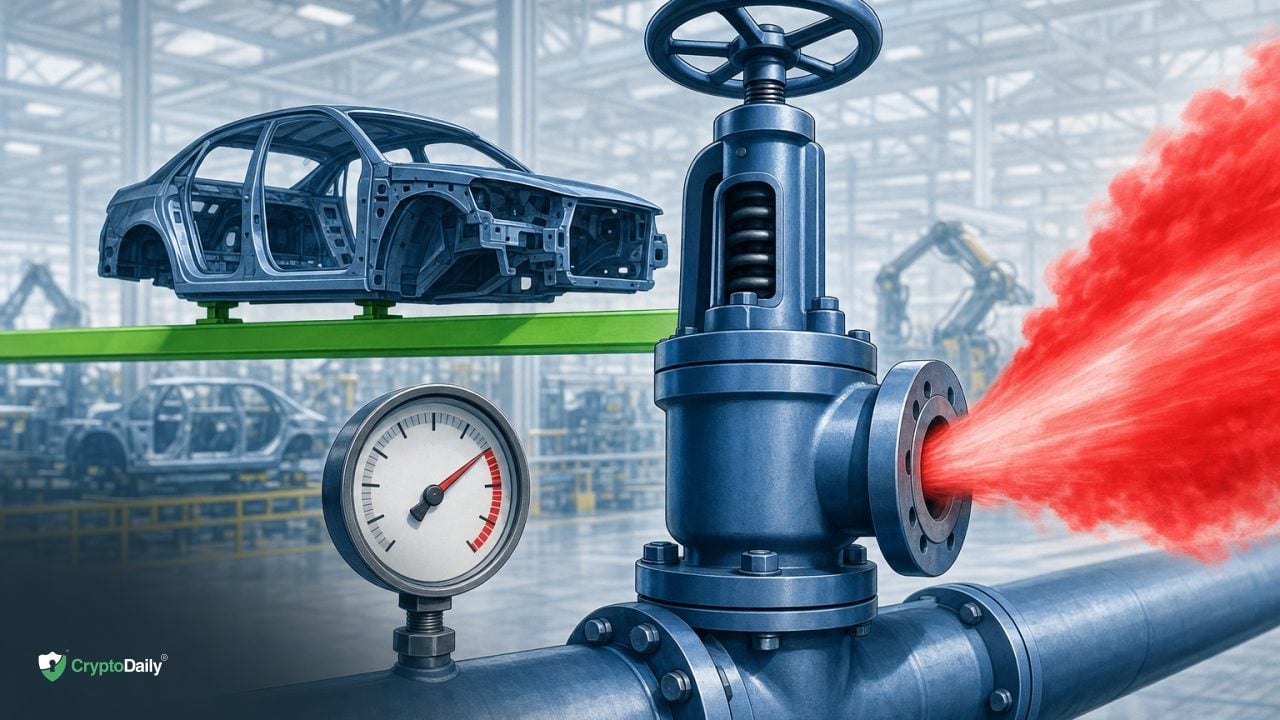
A curious line item has been hitting corporate treasurers’ dashboards: tariff refunds. Not a trickle. A wave. For an automaker that lives and dies by cost per unit, that timing matters.
General Motors is about to open the books. Q2 results drop early on July 21, with the call mid-morning. The question hanging over the tape is simple: do these refunds and any tariff relief meaningfully cushion margins right now, or do they just buy time?
Meanwhile, GM’s U.S. sales slipped 4% in the quarter. Mix, pricing, input costs, and one-off policy flows are about to collide on a single income statement.
Tariff policy has quietly become an earnings variable again. The U.S. Treasury’s June books reflect a sharp surge in tariff refunds that helped push the monthly federal deficit to roughly 120 billion dollars, according to Reuters (via Investing.com). That does not mean tariffs are gone. It means cash has flowed back to importers due to updates, corrections, legal challenges, or program mechanics.
Tariff relief is not revenue. It is timing. It lowers cash out the door today, but it rarely fixes structural margin problems by itself.
Layer in GM’s near-term fundamentals. The company will post Q2 2026 financials around 6:30 a.m. ET and hold its call at 8:30 a.m. ET on July 21, per General Motors Investor Relations. And it already disclosed U.S. Q2 sales of 714,896 vehicles, down 4% year over year, in a July 1 update from General Motors Investor Relations (Sales release).
How Tariff Refunds Actually Hit an Automaker’s P&L
Let’s demystify the plumbing. Automakers import parts, modules, and sometimes finished vehicles. Tariffs are paid when goods clear. Refunds show up when items were over-assessed, reclassified, exempted retroactively, or when specific emergency tariff programs are unwound or adjusted. In accounting terms, the impact can land either as a reduction to cost of goods sold, a contra expense, or as other income. Details vary by company policy and materiality tests.
Zooming out, the average effective U.S. tariff rate was around 7.2% as of May 2026, and emergency tariffs under IEEPA had generated about 166 billion dollars in collections in total. Treasury paid an estimated 21 billion dollars of IEEPA-related refunds in May alone, according to the Penn Wharton Budget Model. That scale tells you refunds can be large enough to move corporate cash flows in a given quarter.
Refunds are lumpy by design
They do not arrive neatly in sync with production cycles. Which means margin optics can look better or worse than the underlying run rate if you do not adjust.
- Parts clear customs and tariffs are paid at import.
- A reclassification, exemption, or program change triggers a refund claim.
- Government review concludes and cash is sent back.
- Finance allocates the refund to COGS or other income, subject to policy.
- Analysts back out the one-off to read the core gross margin trend.
For GM, the call will likely address whether any Q2 refund flows are material, where they are recorded, and how investors should normalize them when modeling the second half.
Where GM Stands Heading Into Q2 2026
We already know one headline: U.S. volumes fell 4% year over year to 714,896 vehicles in Q2, per GM’s sales release. The mix still leans heavy trucks and SUVs, traditionally GM’s margin engines, with EV adoption paced by customer incentives, charging access, and model availability.
Timing also matters. GM set its earnings date and call for July 21, 2026, which puts it squarely after a June that saw an unusual wave of tariff refunds hit the federal ledger, as noted by Reuters and framed in the broader tariff context by PWBM. If GM was part of that refund tide, Q2 cash and the presentation of cost lines could show it.
Signals to parse in the release
- Gross margin movement versus Q1, with a note on any non-recurring items.
- COGS detail by segment if disclosed, including import content sensitivity.
- Warranty and recall accruals, which can overshadow any tariff tailwind.
- EV unit economics commentary. Batteries still dominate that cost stack.
Inputs, Pricing Power, and the Margin Math
Tariff relief could help, but it sits alongside a messy input landscape. Steel and aluminum drift with global supply. Battery materials have cooled from pandemic peaks but continue to bounce. Semiconductor availability is much better than 2021, though specialty chips still pinch certain trims. Freight costs normalized, then crept on fuel and capacity. None of that is static.
Driver
Exposure for GM
Tariff sensitivity
Near-term read
How it might show up
Steel & aluminum
Body, chassis, powertrain
Moderate, depending on origin
Pricing mixed vs 2023 peaks
COGS tailwind if metals soften
Battery materials
Cells, packs for EVs
High if cell components are imported
Volatile, supply diversifying
EV gross margin sensitivity
Semiconductors
Infotainment, safety systems
Low tariff, high scarcity risk
Improved supply vs 2021–2022
Fewer line stoppages, cleaner builds
Freight & logistics
Global parts movement
Indirect via fuel and routes
Mostly normalized with blips
Lower per-unit delivery costs
Tariffs & refunds
Imported parts and select vehicles
Direct, varies by program
Refund surge noted in May and June
COGS relief or other income
Pricing power is the swing factor
If retail incentives stay contained and dealers move inventory without heavy discounting, GM can protect unit economics even with softer volumes. If the industry leans on incentives to clear 2025 model year stock, that could blunt any tariff-driven tailwind.
EV vs ICE: Tariffs, Batteries, and China Exposure
Tariff policy does not hit all vehicles the same way. EVs live or die by cell and component costs. Internal combustion trucks carry heavy metal and complex powertrains. Both rely on global supply webs that interact with tariff schedules in different places.
Battery supply and cost gravity
Cells and cathode materials are the beating heart of EV costs. If GM imports any battery components that fall under tariff regimes, refunds or relief can move the needle on EV gross margins. The effect may be more visible in models with higher imported content. IRA-related incentives and localized cell production help, but they are not a shield against short-term import cost swings.
China touchpoints and alternatives
Even when final assembly is in North America, subcomponents may originate in Asia. Continued diversification to domestic or allied suppliers can reduce exposure to tariff volatility, but it takes time. In the interim, careful sourcing and contract terms can soften the blow or capture refunds when classifications change.
ICE advantages and limits
Trucks and SUVs often enjoy stronger pricing power and dealer throughput. That helps gross margins. Yet they are metal-heavy and sensitive to steel and aluminum. Tariff rebates on specific parts might help, but the bigger swing often comes from retail demand and incentives.
What The Market May Key On During The Call
GM’s Q2 deck and Q&A should make it clear how much of any margin change was operational versus policy-driven.
- Disclosure of any material tariff refunds in Q2 and their accounting treatment. Given PWBM’s estimate of 21 billion dollars in IEEPA-attributable refunds in May and the June deficit effect flagged by Reuters, the question is fair.
- U.S. mix commentary after a 4% volume dip to 714,896 units, per GM’s sales release. Do high-margin trims still carry?
- EV margin trajectory and battery cost roadmap. Are raw material contracts rolling at better prices, or is improvement mostly scale?
- Inventory and incentive strategy into late summer. This will set the tone for Q3 gross margins.
- Capital returns and balance sheet flexibility. If refunds boosted cash, does that ripple into buybacks or debt pacing?
Donald Trump holding a tariff chart — highlights the political origin of the tariff program whose refunds and replacement duties are now driving the budget and corporate-margin dynamics that will feature in GM’s earnings. — Source: The Guardian (photo: Carlos Barría/Reuters)
Risks & What Could Go Wrong
- Refunds are one-time. If they prop up a quarter, the year’s run rate can still disappoint when the flow stops.
- Industry-wide discounting to move inventory could compress margins faster than any tariff relief can help.
- Warranty or recall costs can spike without warning and overwhelm cost benefits elsewhere.
- Policy whiplash. Tariff classifications can change again, and future refunds are not guaranteed.
- Supply chain surprises. A single constrained chip or material can delay high-margin builds.
- Macro demand softness. Higher financing costs or consumer fatigue can slow big-ticket purchases.
Even clean quarters can hide fragility. If core unit economics need incentives to hold, refunds will not save the trend line.
A quick note on coverage
If you track macro crosscurrents that hit risk assets and equities together, keeping one feed for autos, rates, and digital markets helps. We monitor these intersections daily at Crypto Daily because policy shifts like tariff refunds do not stay in their lane. They leak into funding markets, hedging costs, and investor risk appetite across the board.
Frequently Asked Questions
When exactly will GM report Q2 2026 results?
GM plans to post its Q2 2026 results around 6:30 a.m. ET on July 21, 2026 and host the earnings call at 8:30 a.m. ET the same day, according to General Motors Investor Relations.
What did GM say about sales heading into the print?
The company reported U.S. Q2 sales of 714,896 vehicles, down 4% year over year, in its July 1 sales update. That gives a baseline for mix and pricing analysis before the full P&L arrives. See the release on GM Investor Relations.
How do tariff refunds show up in earnings?
Refunds can be recorded as a reduction to cost of goods sold or as other income. Treatment depends on accounting policy and materiality. The key is to separate recurring operating margin from one-time benefits so you do not overestimate sustainable profitability.
Why are tariff refunds in the news now?
There was a notable wave of refunds in late spring. PWBM estimates Treasury paid roughly 21 billion dollars of IEEPA-related refunds in May, with the average effective U.S. tariff rate at about 7.2% as of May 2026. June’s federal deficit was also lifted by tariff refunds, per Reuters and PWBM.
Could refunds materially boost GM’s margins this quarter?
They could help if the amounts are significant and tied to GM’s import mix. But refunds are lumpy and not a strategy. Core drivers like pricing discipline, input costs, and warranty rates still set the slope of margins for the rest of the year.
What should investors watch to separate one-offs from trend?
Listen for management’s bridge of gross margin from Q1 to Q2 that isolates non-recurring items, any disclosure about tariff-related entries, and guidance that recalibrates H2 without assuming more refunds. The MD&A in the 10-Q often clarifies where unusual items land.
Do tariff refunds change GM’s cash priorities?
Short-term, yes. Extra cash can ease working capital, reduce commercial paper usage, or support buybacks if the board approves. But it should not substitute for improving unit economics. The call should make clear how transitory flows influence capital allocation.
Disclaimer: This article is provided for informational purposes only. It is not offered or intended to be used as legal, tax, investment, financial, or other advice.